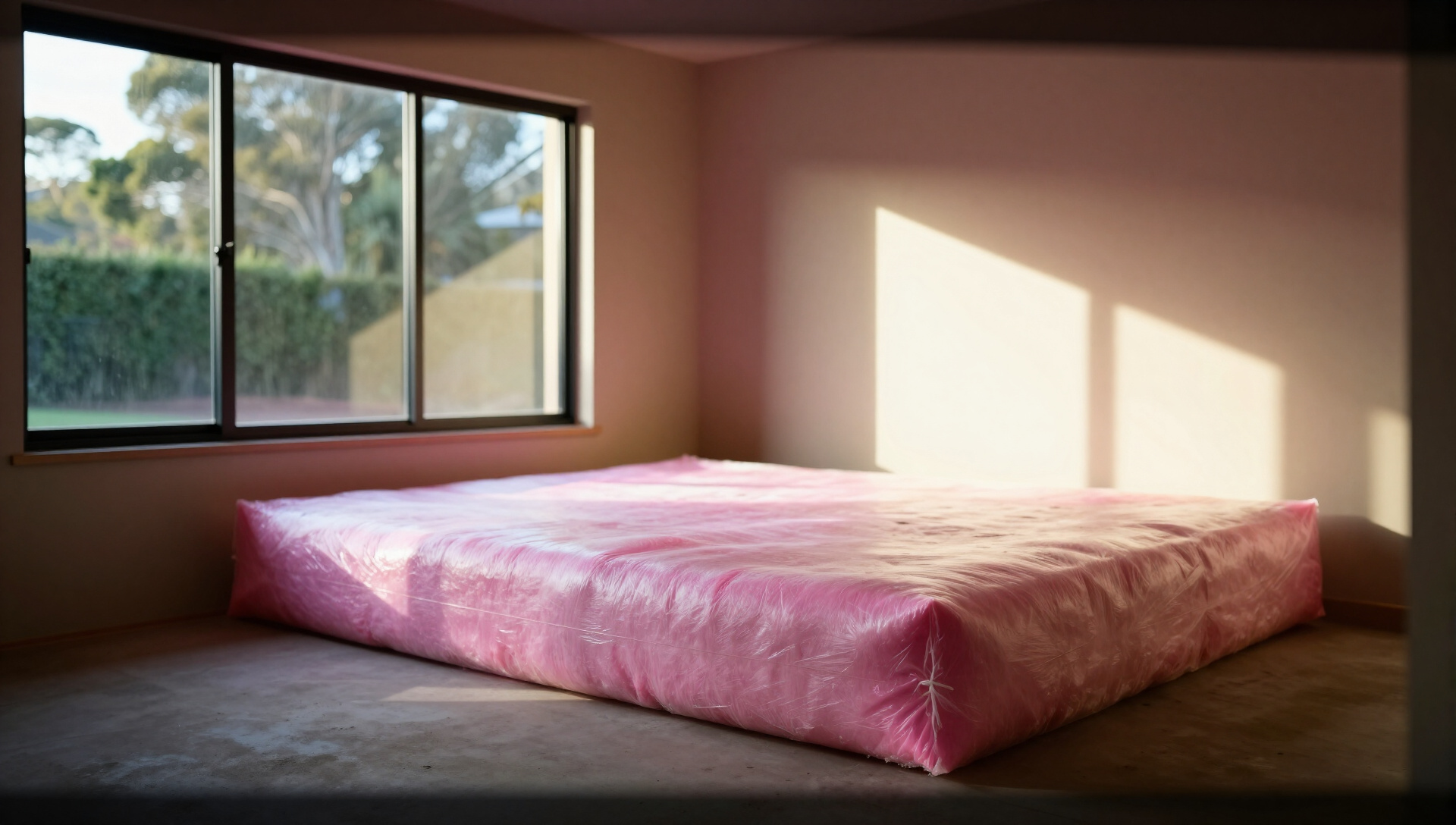
Bulk insulation is the most common and cost-effective way to improve thermal performance in Ringwood homes. It works by trapping millions of tiny pockets of still air within the material, which resists the flow of heat. In Melbourne’s climate, this means less heat escapes through the ceiling in winter and less radiant heat enters through the roof in summer.
For Ringwood’s brick veneer homes, ceiling insulation is the priority because the roof space is the main path for heat loss and gain. Wall insulation is also effective, especially in weatherboard houses with timber frames, but it usually requires access during renovations or by removing internal linings. Underfloor batts are fitted from the subfloor in homes with suspended timber floors, addressing cold floors and draughts.
The R-value you choose depends on your budget, the area being insulated and your comfort goals. Higher R-values provide better thermal resistance but cost more and take up more space between joists or studs. In Ringwood, ceilings commonly use R4.0 to R6.0, walls R2.0 to R2.7 and underfloors R1.5 to R2.5. If old insulation is present, we assess whether it can be topped up or needs full replacement.